209

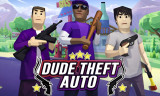
Dude Theft Auto
74
Dude Theft Auto is a free 3D sandbox game where players drive, shoot, and cause chaos in a city filled with ragdoll physics and GTA-style freedom.
Dude Theft Auto is a 3D physics sandbox game that drops players into a city where rules feel optional. There is no strict storyline to follow, no fixed order of missions, and no invisible hand forcing progress. Instead, the game hands over a city, a set of tools, and a simple question: What kind of chaos feels fun today?
Often described as a Ragdoll GTA-style experience, Dude Gangster City does not try to compete with big-budget open-world titles. It leans into humour, exaggerated physics, and freedom. One moment, the player is calmly driving through city streets. Next, a police chase unfolds after a poorly judged rocket launcher experiment. The city reacts, sometimes violently, sometimes absurdly.
Dude Theft Auto is available for free as a browser game, running on HTML5/WebGL without any downloads.
At its core, Dude Theft Auto plays like a simplified third-person action game.
On PC, movement follows familiar sandbox logic:
On mobile, touch controls translate these actions into on-screen buttons and virtual joysticks.
Driving feels intentionally loose. Cars slide, flip, and crash like a set of Hot Wheels rather than a realistic simulator. Shooting is equally chaotic. Precision matters less than timing, positioning, and knowing when to escape before the sandbox turns hostile.
There is no single “correct” way to play. Some players focus on missions, others treat the city like a personal testing ground for physics experiments.
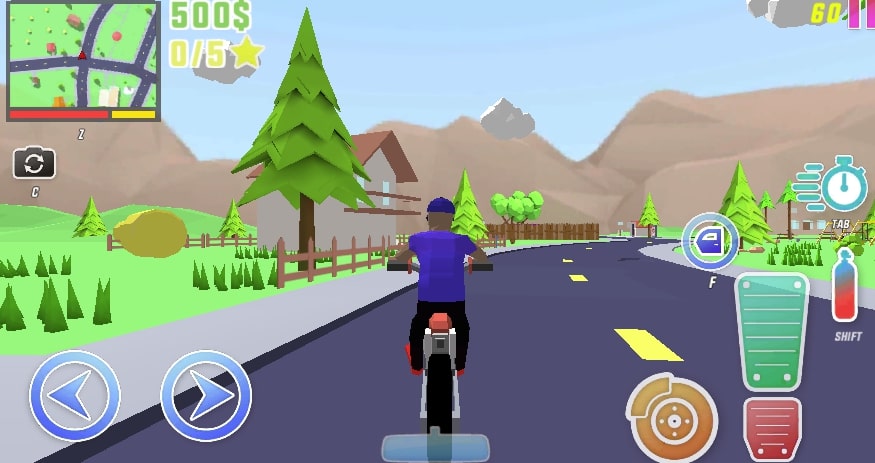
Players need to approach the vehicles and then press F to control them in the Dude Theft Auto game
Dude Theft Auto feels most alive when the physics take control. Impacts are rarely clean, landings are often awkward, and characters react more like improvised ragdolls than animated models. A slight bump can send a driver rolling across the street, while a careless turn might flip a vehicle for no apparent reason.
That instability is not a flaw. It is the engine of the experience. Instead of scripted sequences, the game lets cause and effect write its own scenes. A jump meant to save time can attract police attention, escalate into a chase, and end with the city in complete disorder. These moments are not designed — they happen, and that is why they stick.
Our playground is the street, the houses, and the scenery of the entire street in the game. Players can steal cars, explore rooftops, or ignore everything and drive in circles to see how the physics behave. In that sense, Dude Gangster City feels like a living toy box rather than a traditional map.
Police response escalates naturally. Small disturbances attract little attention, while repeated destruction invites helicopters, roadblocks, and overwhelming force. The tension rises without needing complex systems.
In the game, the developers encourage players to use a variety of weapons, from baseball bats to rifles or handguns. Vehicles also vary from motorcycles to cars, providing more flexibility (hoặc optimized) for the different terrains the player must navigate while fleeing.
This is a purely physics-based game, not a logic game. Therefore, the value left after each level is the collision record the player has earned in the game.
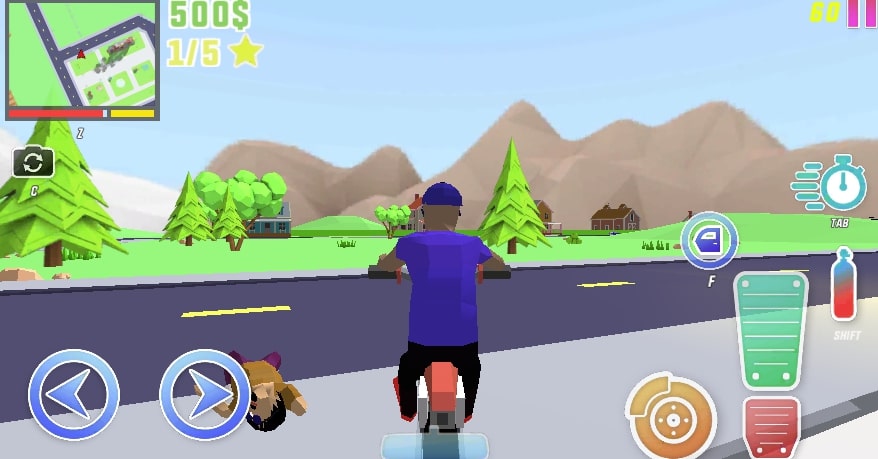
When you injure someone, you'll receive a bonus, so grab it!
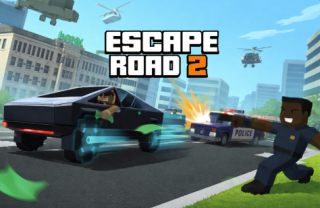
Escape Road City forces you to be a pro driver, but Dude Theft Auto is more interested in the carnage; you get paid for the crashes, not for how well you take a corner. Although the goal remains escaping the police, the execution differs entirely.
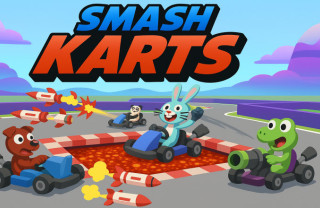
Compared to Battle Karts, things become clearer. Both games are basically about smashing into things, but they reward you differently. In Battle Karts, taking people out is just a way to climb the ranks. In Dude Theft Auto, though, every wreck pays out instantly with stars and loot.
Both comparisons highlight Dude Theft Auto’s identity as a sandbox simulator, not a competitive arcade experience.
Dude Theft Auto succeeds by embracing imperfection. It does not chase realism or narrative depth. Instead, it delivers freedom, humour, and physical unpredictability in a compact browser format. The joy comes from moments that were never planned: a bad landing, a chain reaction, an escape that barely works.
For players in search of a lighthearted, offline-friendly sandbox with GTA-inspired chaos, Dude Theft Auto is highly recommended.
Surprisingly, not as quickly as expected. While the city itself does not change much, physics interactions keep moments unpredictable. A chase that feels familiar can flip when a vehicle clips a curb or an NPC reacts differently. The replay value comes less from content volume and more from how systems misbehave.
It sits in between. This game only references GTA's gameplay. Where GTA aims for immersion, Dude Theft Auto leans into comedy and physical nonsense. Calling it a parody misses the point—it is better understood as a simplified sandbox remix.
Missions exist, but they are not the heart of the experience. Many players treat them as optional excuses to earn money or unlock new tools. The real appeal appears between objectives, when unscripted chaos takes over, and the city reacts in ways no mission designer planned.