Orbit Kick
1.11K
Orbit Kick is a fast, physics-driven Space Soccer Game where each kick pushes the ball farther across global landscapes. To master this Orbit game Kick challenge, you must upgrade your power, master the controls, and relentlessly chase distance records.
Orbit Kick is like one of those quick browser distractions, the kind players open for a minute and forget. Yet once the ball leaves the ground for the first time, the game shows its real personality. It’s surprisingly lively. Each kick feels like firing a miniature comet—sometimes messy, sometimes brilliant, but always tempting enough. The game runs on HTML5, and unblocked versions are available almost everywhere, from school computers to casual gaming sites. Easy access, quick restart, repeat. That’s where its charm begins.
The Free game doesn’t pretend to be complicated. A ball, a kick, and a long stretch of terrain that looks harmless until the ball starts bouncing on it like a stubborn traveller refusing to stop. Distance becomes the score, coins become fuel for upgrades, and progress feels visible from the very first few runs. That simplicity sets a nice rhythm: no long tutorials, no elaborate menus, just pure cause and effect.

Player locker room in the Orbit Kick game
The basic action centres around timing. The indicator swings, the tension builds, and a tap sends the ball into the sky. That moment—right before the screen shakes a little—is the closest thing to winding up a slingshot. A weak tap barely lifts the ball. A perfect tap makes it shoot upward like a Zero Gravity Kick, floating longer than expected.
The ball's flight path is influenced by its interaction with the landscape, featuring hills, ramps, and uneven ground. Here, the 3D game controls reveal their real value. A small swipe nudges the ball mid-flight, sometimes enough to correct a bad angle or stretch a landing into a roll. It’s a light touch, nothing too technical, but it changes the flow of each run.
Coins accumulate as distance increases. Spend them on upgrades—Power for stronger launches, Bounce for longer survival on the ground, and Offline Earnings for progress even when the game is closed. It’s easy to see each upgrade pay off; the next attempt always feels a bit more confident.
Every milestone pushes the player into a new backdrop. Each long enough kick will take the player to another city. Famous global landmarks, such as the Eiffel Tower, the Statue of Liberty, and New York, the city that never sleeps, will appear during the player's kicking journey. These scenes make the game more lively and attract the player's exploration.
Orbit Kick intentionally keeps its upgrade system small, yet every single stat directly impacts performance. Power visibly changes the launch arc; Bounce makes the ball tougher against harsh landings. There’s no fluff here. A few upgrades can completely reshape a bad run into a surprisingly long one.
Every kick lasts only seconds, yet each attempt comes with micro-decisions—tap timing, swipe direction, upgrade choices. The pace remains brisk. The game strikes a refreshing balance between Zen-like calm and satisfying challenge. It's a unique take on a space soccer game, where physics, luck, and microscopic mid-air adjustments blend into a bizarrely compelling and addictive loop.
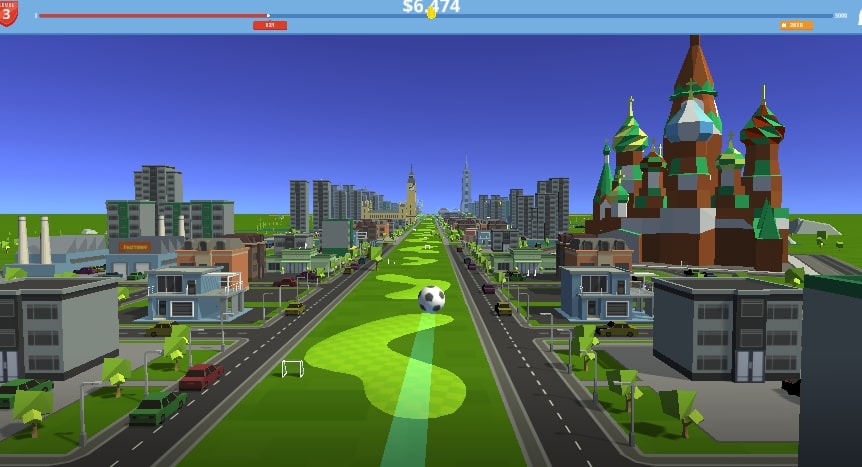
The player's ball is flying in the air in the Orbit Kick game
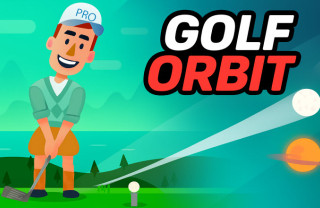
Golf Orbit focuses on tighter timing and sticks closer to reality. Orbit Kick, meanwhile, leans into pure exaggeration—the ball seems to be constantly struggling to orbit the planet instead of staying grounded. This fundamental distinction means that while Golf Orbit is structured and precise, Orbit Kick offers an experience that is far freer, lighter, and more playfully chaotic.
Now consider the other end of the spectrum: Orbit Dash. That game is defined by speed, dodging, and non-stop reactive tension. Its runs are short and intense sprints. In contrast, Orbit Kick feels less like a competition and more like a long-distance experiment where every single upgrade unlocks entirely new potential. If Orbit Dash is a frantic sprint to the finish line, Orbit Kick is a strategic marathon equipped with oxygen boosters.
Orbit Kick Free finds its unique niche by staying clean and focused. There are no complicated rule sets or heavy mechanics—it boils down to satisfying physics, distance, and a hint of wanderlust. The global backdrops add undeniable flair, the tap-and-swipe controls are friendly, and the momentum curve constantly hooks players into analysing how to stretch the next run just a few meters further. For anyone seeking a light, rewarding physics challenge that asks for zero commitment yet handsomely repays persistence, Orbit Kick sets the benchmark for browser-based distance games.