209
188


Mars Jump
17
Mars Jump is a skill-based jumping game where reflex, timing, and survival instincts collide in a space-like challenge that rewards calm control. Play the game now on my site!
Mars Jump is a skill-driven jumping game that strips things down to the essentials: movement, timing, and survival. There is a tutorial, a story to follow, and a safety net once momentum is gained. The game drops the player into a vertical challenge that feels closer to a Space Jumper trial than a casual arcade title.
At first glance, The Jump game looks approachable—clean visuals, simple platforms, clear gaps. Each jump begins to feel like a decision with weight. A fraction too much force, and the run ends. Too cautious, and progress stalls.
It shares the tension of a Galaxy Jump Game, where silence between jumps matters as much as the jumps themselves.
The core controls are easy to grasp.
That simplicity hides the real challenge. The online game is not about speed. It is about restraint. The physics lean toward precision, similar to Mars Jump physics, where height and distance are never fixed values but results of timing and rhythm.
There is no pause to rethink mistakes. Falling means restarting. And restarting happens often.
Playing Mars Jump feels like walking on thin ice. One confident step at a time, never rushing.
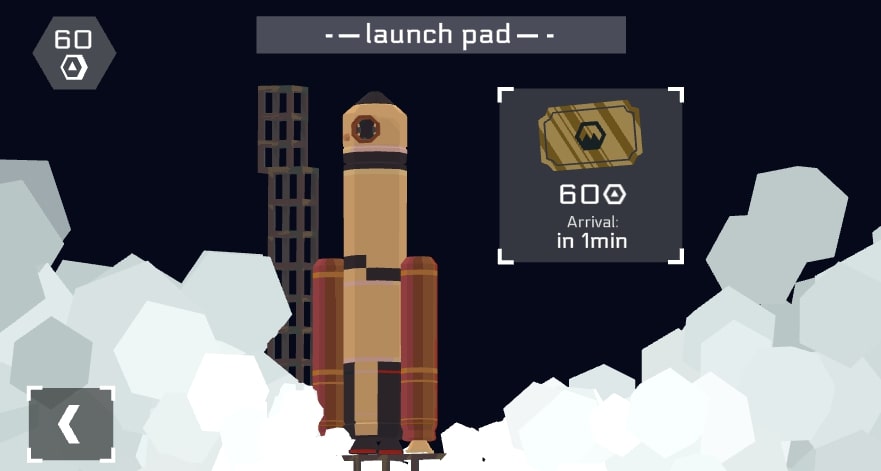
The first reward for reaching platform number 7 in the Mars Jump game.
Every jump demands attention. There is no autocorrection or hidden assistance. The game rewards players who read distances calmly and punishes those who rely solely on instinct. This is closer to Jump Mars space logic than to traditional arcade hopping.
The Quick Reflex game does not use levels in the usual sense. Progress is measured by how long the run survives. The higher the climb, the more pressure builds. It creates the same tension found in Mars Jump online, where survival becomes the real score.
The 3D design stays subtle. Platforms float in open space, giving the feeling of being suspended above nothing. That emptiness matters. It amplifies every mistake. The game’s minimalist visuals let players focus entirely on motion and timing.
Mars Jump quietly favors calm judgment. Steady control lasts longer than bold moves.
Landing a jump in Mars Jump isn't nearly as effortless as in Flappy Dunk. Here, a single button press rarely guarantees a safe landing, making for a significantly steeper challenge. Flappy Dunk thrives on constant motion and repetition, while Mars Jump values controlled pauses. One is about flow; the other is about balance.
Against Madness Lab, the difference lies in chaos. Madness Lab embraces unpredictable traps and reaction-heavy design. Mars Jump, by contrast, builds pressure through simplicity. Nothing distracts from the jump itself.
If Flappy Dunk is a sprint and Madness Lab is a storm, Mars Jump is a tightrope.
After several runs, a pattern emerges. The best attempts are rarely the fastest ones. The strongest runs come when the player stops chasing height and starts respecting distance.
There is a moment, mid-run, where hands relax, and the game feels lighter. That moment never lasts long, but it is addictive. It is the reason why “one more try” turns into ten.
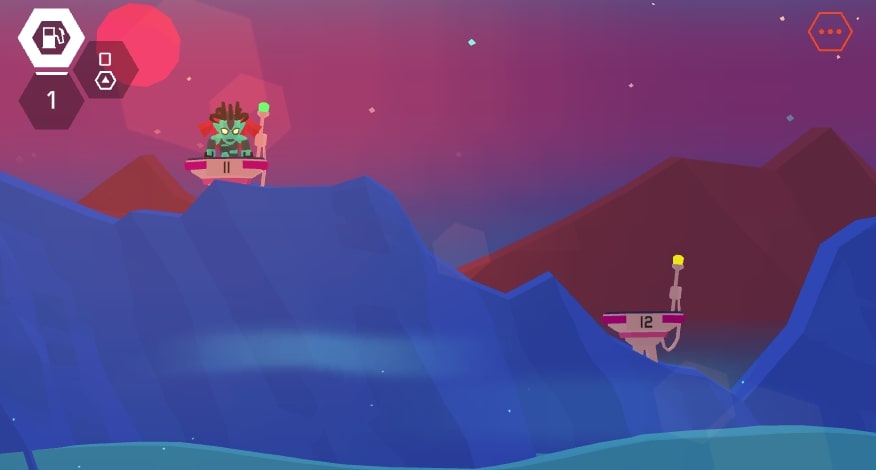
Try to get past platform number 10 to receive a new character skin in the Mars Jump game.
This is not a loud game. It does not celebrate wins dramatically. Instead, it quietly challenges the gamer’s patience, much like the Red Planet Jump concept, where space itself feels indifferent.
Mars Jump unblocked versions play smoothly on most browsers, including platforms like Yoplay.io.
Mars Jump is a game that demands high-level skill in using two-key combinations. It's not a jumping game for players in a hurry, or simply for those who want a short, quick game. Repeated failures often cultivate patience in the player. That's the special appeal of this alien game.
It is a survival test disguised as a simple jump game. And once the rhythm clicks, letting go becomes harder than starting.
Not exactly. It rewards controlled pacing more than speed.
No. Progress depends entirely on player skill.
Yes. Runs are short, but replay value is high.
It leans strongly toward skill challenge and reflex control.