64
That’s Not My Neighbor is a tense identity check horror game where players inspect neighbors, feel scared, spot doppelgangers, and decide who survives each shift.
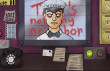
That’s Not My Neighbor is a 2D identity check horror game set in 1955, where a player works as a doorman for the D.D.D. (Doppelganger Detection Department). Every knock on the door feels like a coin toss between safety and disaster. It looks calm, almost boring, but that calm is a thin layer of ice. One wrong step, and everything breaks.
As a Doppelganger identification game, it blends routine work with creeping paranoia. Papers look fine, faces look familiar, yet something always feels off. That’s why many gamers see it as a standout fake neighbor game rather than a typical horror title. It’s playable as That’s Not My Neighbor unblocked or Neighbor free on browser platforms like Yoplay.io.
The core loop is simple but stressful. Each visitor claims to be a resident. The player checks documents, compares details, asks questions, and decides their fate. Let them in, deny access, or call D.D.D. support. The game rarely scares with loud moments; instead, it presses slowly, like a stare that lasts too long.
Across Campaign, Arcade, Nightmare, and Custom modes, mistakes stack up. By day five or seven, every decision feels heavier, like carrying water in cracked hands.
Ending Name | Main Condition | Outcome |
Just Like Henry | Mostly correct decisions | Neutral survival |
Model Employee | Perfect performance | Best ending |
Entitled to One Call | Overusing D.D.D. | Arrested |
Six Feet Under | Let everyone in | Total collapse |
Conspirator | Lore-specific mistake | Secret ending |
These outcomes form That’s Not My Neighbor's endings, each reflecting how carefully the player handled identity checks.
What stays after playing isn’t fear, but doubt. The game feels like sorting faces in fog—clear enough to see, never clear enough to trust. As an identity check horror game, it succeeds by making silence louder than screams.