212

White Horizon
30
White Horizon turns skiing into rhythm and focus. Glide through shifting weather, unlock skiers, and master balance on endless snow-covered slopes.
Not every game needs noise to be intense. White Horizon begins in silence — only snow, wind, and the long stretch of a mountain waiting for your first move. It’s a skiing game, yes, but one that feels more like learning a rhythm than chasing a finish line. The snow doesn’t care how fast you are; it cares how steady.
Each slope looks gentle until it suddenly folds under you. That’s when the game comes alive — a small heartbeat of panic followed by the satisfaction of landing right.
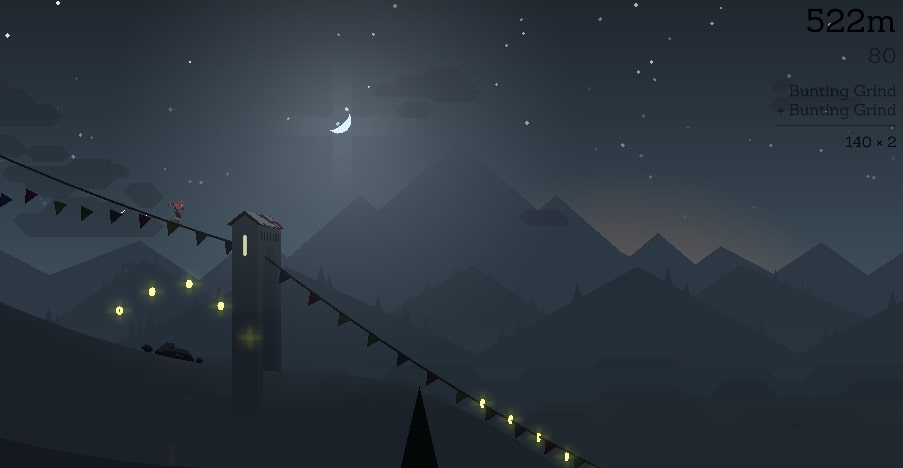
Players slide on the line, hanging the tribal flag in White Horizon game
There’s no complex control system here. Play uses one key — the spacebar.
Tap it once to jump, or hold it longer to flip mid-air. That’s the entire vocabulary of movement, yet it’s enough to fill each run with risk and reward.
At first, a short tutorial walks you through the essentials — jumping over rocks, gliding through valleys, and collecting coins. The early runs feel gentle, almost kind, until the slopes tighten and every mistake begins to count.
After every run, the free game quietly tracks what you’ve done:
The numbers don’t shout. They sit there, like a record of your rhythm — how long you kept calm when everything was moving.
The mountain changes its mood. Morning arrives with pale golden light, a gentle breeze, and birds gliding through the open air. Nights arrive quietly — fireball, snow glows faintly, and the path feels deeper. Sometimes rain cuts through the calm, turning the world grey and heavier under your skis.
This isn’t a static backdrop. It’s a partner that changes how you move. When it rains, jumps feel slower. At night, depth becomes tricky. You’re not just reacting — you’re adapting.
The game’s physics are subtle but exact. Every leap feels real — the takeoff, the hang in mid-air, the impact. You can almost sense the snow’s resistance under your skis. Tricks aren’t about showmanship; they’re about confidence. Hold the jump too long, and you crash. Let go too early, and you miss the score. The best players don’t rush. They listen.
The game does not have available skins for the skaters. The players can not choose; all are hidden. The player's job is to play through the game. New skins will be unlocked when you play and reach a certain number of milestones.
Some people will jump well, some will do somersaults well, ... Most of them are designed to help players pass the next level easily.
The skill game never lets you skip ahead. You begin from Level 1 and climb steadily. Every level carries its own set of goals — “travel 500m in one run,” “catch five llamas,” “jump over two rocks.” Achieving all earns three stars. The design forces patience; progress isn’t given, it’s learned.
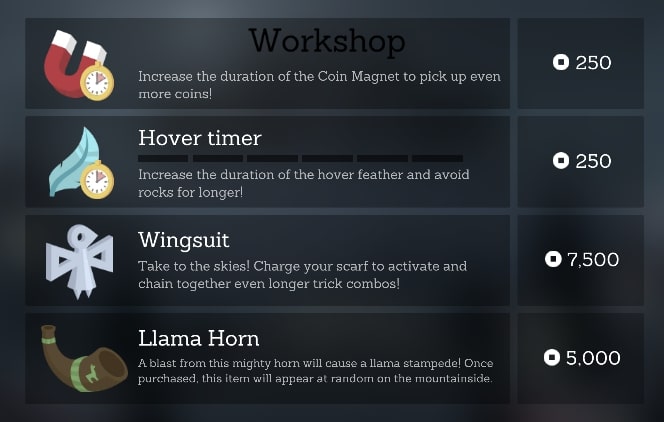
The workshop in the White Horizon game
All three games share snow, but not the same spirit. Snow Road 3D is pure speed — you race, you react, and that’s it. Escape Road Winter is tighter, more puzzle-like, where every move feels rehearsed.
The skies game sits between them, quieter and more deliberate. It doesn’t rush. The snow feels alive, the movement organic. Instead of chasing a finish line, you chase rhythm. It’s less about survival and more about control within motion.
When Snow Road 3D makes your pulse rise, White Horizon makes it slow down — just enough to feel every small success.
White Horizon carries a quiet sense of reflection. It demands effort but never feels harsh. The steep slopes, the deep valleys, the vivid sounds — all come together to create a fresh, deeply thrilling experience for the player.
For players who enjoy calm challenges that still test precision, this game is for them. It’s not about reaching the end of the road — it’s about finding your balance before you fall. Play more snow games at Yoplay: https://yoplay.io.
Yes. It’s a free browser-based HTML5 game that runs smoothly on most devices.
No. You unlock levels one by one as you complete their goals.
Press and hold the spacebar while in the air — the longer the hold, the longer and riskier the flip.